
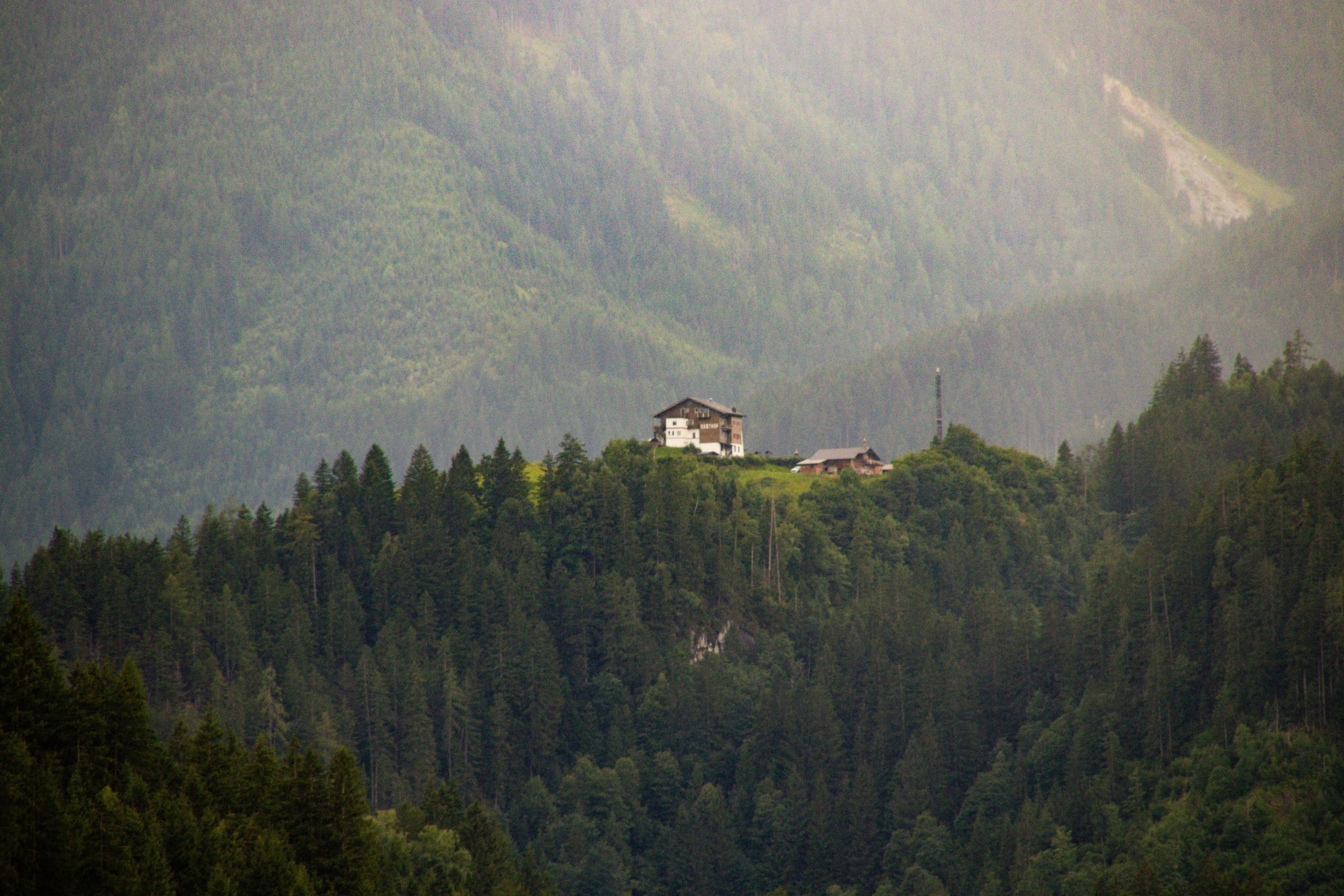
A deck in the mountains lives a different life than a deck anywhere else. For four or five months it’s an outdoor living room. For the rest of the year it’s a structural member holding up several thousand pounds of wet snow, swinging through dozens of freeze-thaw cycles, and taking UV radiation that’s noticeably more intense than what the same board would see at sea level. Treat it like a backyard patio project and you’ll be replacing boards, fasteners, or footings years before you expected to.
None of this is exotic engineering. It’s mostly a handful of decisions made correctly before construction starts, and a short list of things worth spending more on because the alternative costs more over a decade. Here’s what actually separates an outdoor space that lasts thirty years from one that needs rework in eight.
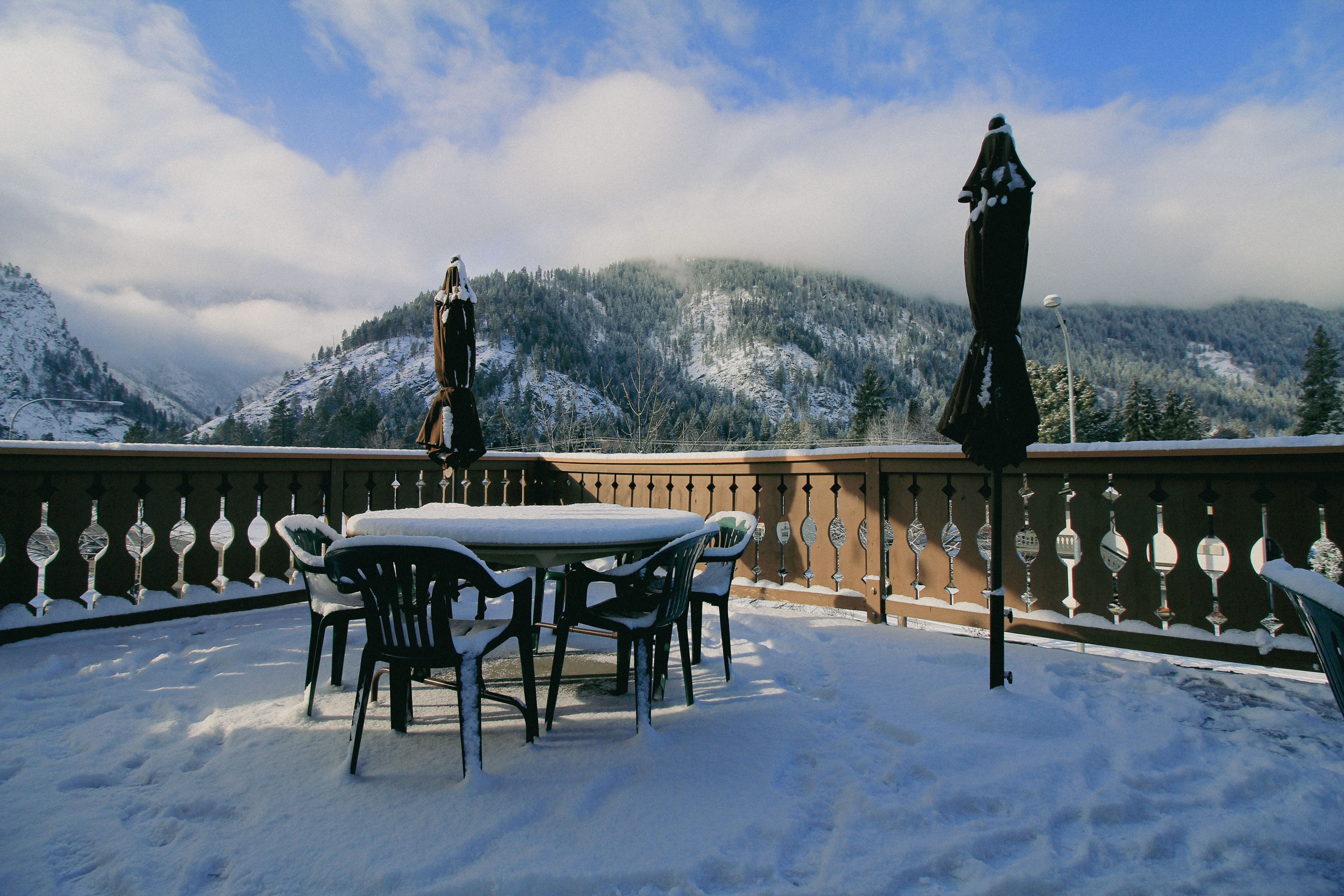
Why Mountain Weather Breaks Outdoor Spaces That Work Everywhere Else
Four things attack a mountain deck or patio at once, and they rarely take turns:
- UV radiation is stronger at elevation because there’s less atmosphere to filter it, which fades finishes and breaks down wood fiber faster than the same board would degrade in a valley.
- Freeze-thaw cycling pushes moisture into any crack, seam, or screw hole, then expands it when temperatures drop below freezing overnight. One builder in North Carolina’s High Country counts more than 80 separate freeze-thaw transitions in a single winter at their elevation – not a once-a-season event, but a near-daily one.
- Snow load is a real structural number, not a design suggestion, and it climbs fast with elevation.
- Dramatic day-to-night temperature swings, sometimes 50 to 60 degrees Fahrenheit in a single day, force every material to expand and contract on a schedule most manufacturers never tested for at low altitude.
Put those four together and you get the actual failure pattern: wood that looked fine in October is cupped and split by April, fasteners back out of their holes, and a patio that seemed level in September has a footing that heaved over the winter. None of that is bad luck. It’s what untreated assumptions about “normal” outdoor material performance look like once you add elevation.
Start Below Ground: Footings, Frost Lines, and the Math Nobody Enjoys
Everything above grade depends on what’s happening below it, and this is the step most self-managed cabin projects shortchange. The International Residential Code sets a baseline: deck footings generally need to sit at least 12 inches below undisturbed ground, and where a deck attaches to a frost-protected structure, the footing has to extend below the local frost line unless it bears on solid rock. In parts of the Rockies, that frost line sits three to five feet down, which is a very different excavation job than a 12-inch minimum suggests.
Snow load follows a similar elevation curve, and it’s steeper than most people expect. In Colorado, sites up to roughly 5,500 feet are generally designed for a 40 psf ground snow load, while properties between 6,500 and 7,000 feet need to account for 60 psf – a 50 percent jump for a few thousand vertical feet of difference. A deck or covered patio engineered for the wrong number doesn’t fail gracefully; it sags, then it doesn’t.
Before anyone pours concrete, it’s worth confirming:
- The local frost depth and ground snow load value for your specific elevation, not a regional average
- Whether footings need to go below frost line, bear on rock, or use an engineered frost-protected shallow foundation
- Joist spacing sized for snow load rather than the span tables used in milder climates (often 12 to 16 inches on center instead of wider spacing)
- Drainage and slope away from the structure, so meltwater has somewhere to go besides into a footing
Picking a Decking Material That Won’t Fight You Every Spring
This is the decision with the biggest long-term consequences, and it’s where I’d push back on the instinct to default to whatever’s cheapest at the lumberyard. Pressure-treated pine costs the least going in, but it typically lasts 10 to 15 years in mountain conditions and needs sealing every year or two to get there. For a cabin that sees weekend use eight or nine months of the year, that maintenance schedule is optimistic at best – the sealing window is narrow, and it’s easy to miss a season.
Research from the U.S. Forest Service’s Forest Products Laboratory on wood decay above ground helps explain why: untreated wood needs moisture content above roughly 25 to 30 percent to support decay fungi, and that threshold is exactly what repeated freeze-thaw wetting pushes bare or poorly sealed wood toward. Dense hardwoods and fully synthetic boards simply don’t absorb enough water to get there in the first place.
If you’re weighing options for a new build or a replacement project, it’s worth browsing a dedicated decking range rather than assuming one material fits every elevation and budget – composite, PVC, and hardwood boards perform differently enough that the right choice really does depend on your specific site and how much upkeep you’re honestly willing to commit to.
| Material | Typical Lifespan at Elevation | Maintenance | Freeze-Thaw Performance |
|---|---|---|---|
| Pressure-treated pine | 10–15 years | Sealing every 1–2 years | Absorbs moisture readily; cups and cracks within a few seasons |
| Western red cedar | 15–20 years | Periodic staining/sealing | Better than pine thanks to natural oils, but still needs sealing |
| Capped composite | 25–30 years | Occasional washing | Polymer cap blocks most moisture; needs proper expansion gaps |
| Dense tropical hardwood (Ipe, Cumaru) | 25–40+ years | Occasional oiling | Very low water absorption; among the best performers tested |
| 100% PVC | 25–40+ years (some warranties to 50) | Occasional washing | No wood fiber, absorbs essentially no moisture |
Figures compiled from Advantage Lumber’s cold-climate decking guide (February 2026), Griffin Decks & Covers’ Colorado material comparison (January 2026), and Mountain Fence & Deck’s High Country material breakdown (August 2026).
It’s also worth noting that lab testing doesn’t always predict field performance. Consumer Reports senior editor Paolo Fu, who leads the publication’s decking tests, put it plainly: “Only one type of decking that started with strong performance when it was brand-new managed to hold up well over a span of three years.” Plenty of boards that look great on day one fade or discolor faster than their specs suggest – which is exactly why warranty terms and independent field data matter more than a showroom sample.
Stone, Pavers, and Patios: What Actually Survives a Freeze-Thaw Winter
Not every mountain cabin wants a raised deck, and ground-level stone or paver patios have their own durability rules. The dividing line is porosity. Soft, porous stone like unsealed sandstone or soft limestone soaks up snowmelt, and when that water refreezes inside the stone, it flakes and cracks the surface from within.
Denser, non-porous materials sidestep the problem almost entirely:
- Granite, quartzite, and dense flagstone resist water penetration and hold their shape through repeated freeze-thaw cycles
- High-density porcelain pavers are essentially thaw-proof and need little more than sweeping
- Concrete pavers work well if they’re rated for the temperature swings and installed over a proper compacted base – skipping the base is the most common reason a concrete patio heaves after one hard winter
Whatever you choose, the base matters as much as the surface material. A patio set on a few inches of sand over unsettled soil will move regardless of how good the stone is.
The Small Parts That Fail First: Fasteners, Connectors, and Railings
Decking gets all the attention, but the hardware holding it together is usually the first thing to show its age. Standard zinc-plated fasteners corrode quickly once they’re exposed to repeated moisture and, in some cases, de-icing salt. Stainless steel is the standard recommendation for exterior use; Type 316 stainless offers meaningfully better corrosion resistance than the more common Type 304, which is worth the upgrade cost on anything structural.
A few other details that quietly determine how long the hardware lasts:
- Hidden fastening systems that clamp boards from the side keep water out of top-surface screw holes, which is one of the main entry points for moisture-driven decay
- Connectors should be hot-dip galvanized or stainless, matched to whatever wood preservative is in contact with them to avoid accelerated corrosion
- Cable and slim steel railings preserve mountain views better than chunky wood balusters, and powder-coated aluminum shrugs off ice and road salt without annual refinishing
Covering the Season: Roofs, Pergolas, and Heat
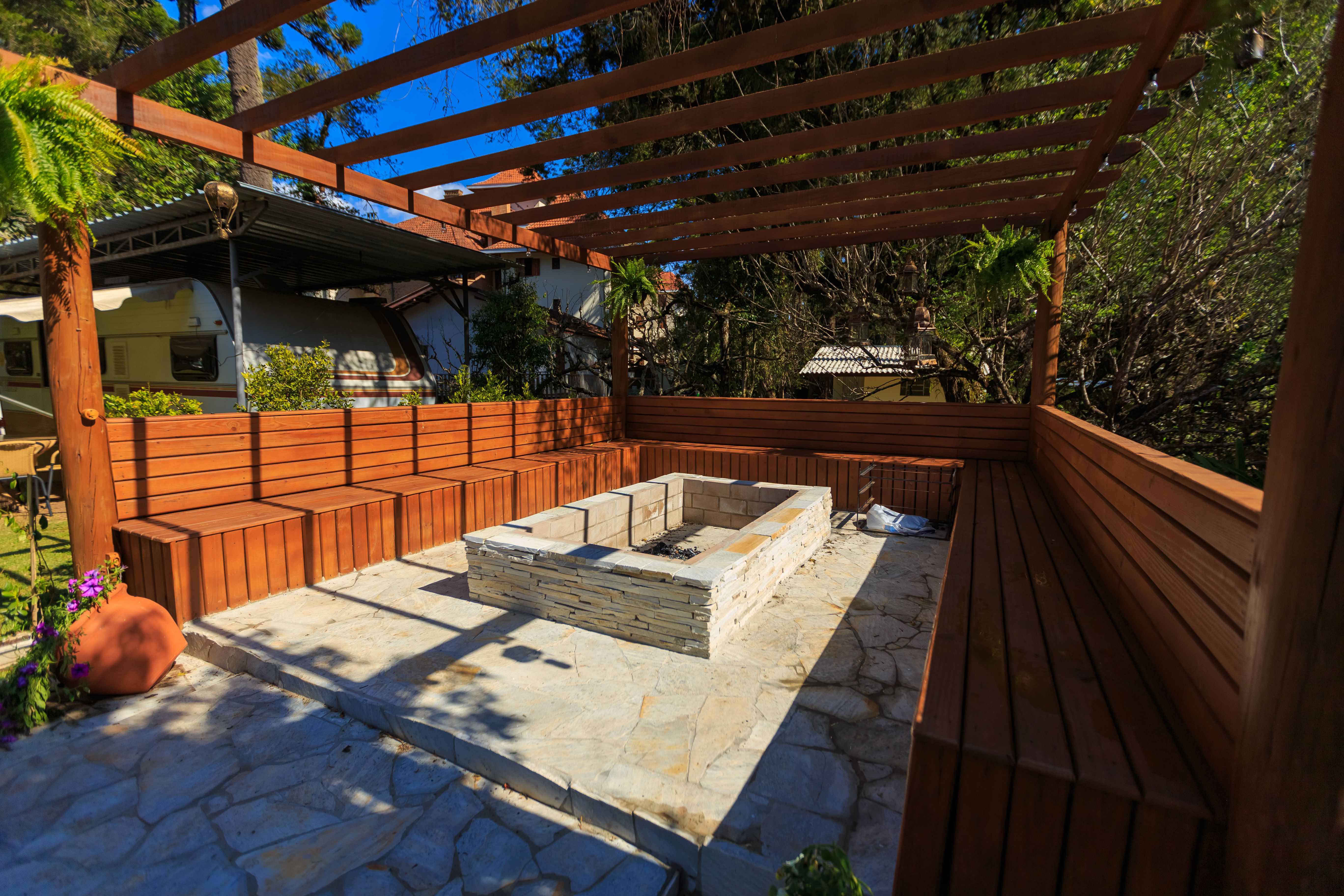
A roofless deck in a place with real winters gets used for maybe a third of the year. A covered one – even partially – gets used for most of it. Timber-frame pavilions, solid pergolas, and roof extensions all buy extra months, but they come with their own structural math: anything overhead needs to be engineered for the same snow loads as the main roof, with enough pitch or a slick enough surface to shed accumulation rather than hold it.
Radiant heating under composite decking or stone, and overhead infrared heaters for covered patios, are the two features that most reliably turn a seasonal space into a three-season one. In wildfire-prone forest edges, it’s also worth knowing that aluminum decking and roofing are non-combustible and tend to outlast the deck frame itself, which is a real consideration for cabins backed up against dense timber rather than open lawn.
Furniture and Fire Features That Don’t Need Babysitting
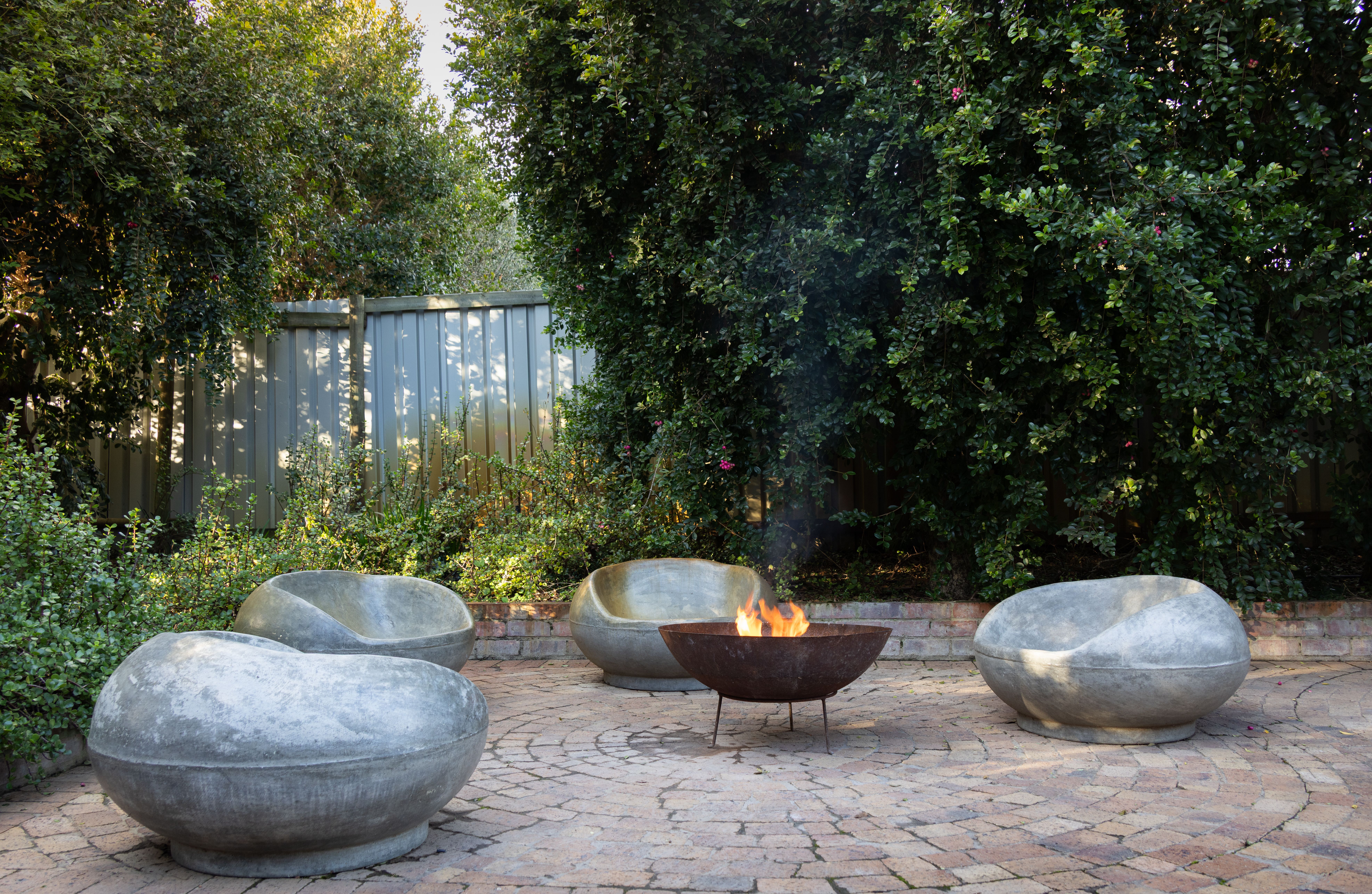
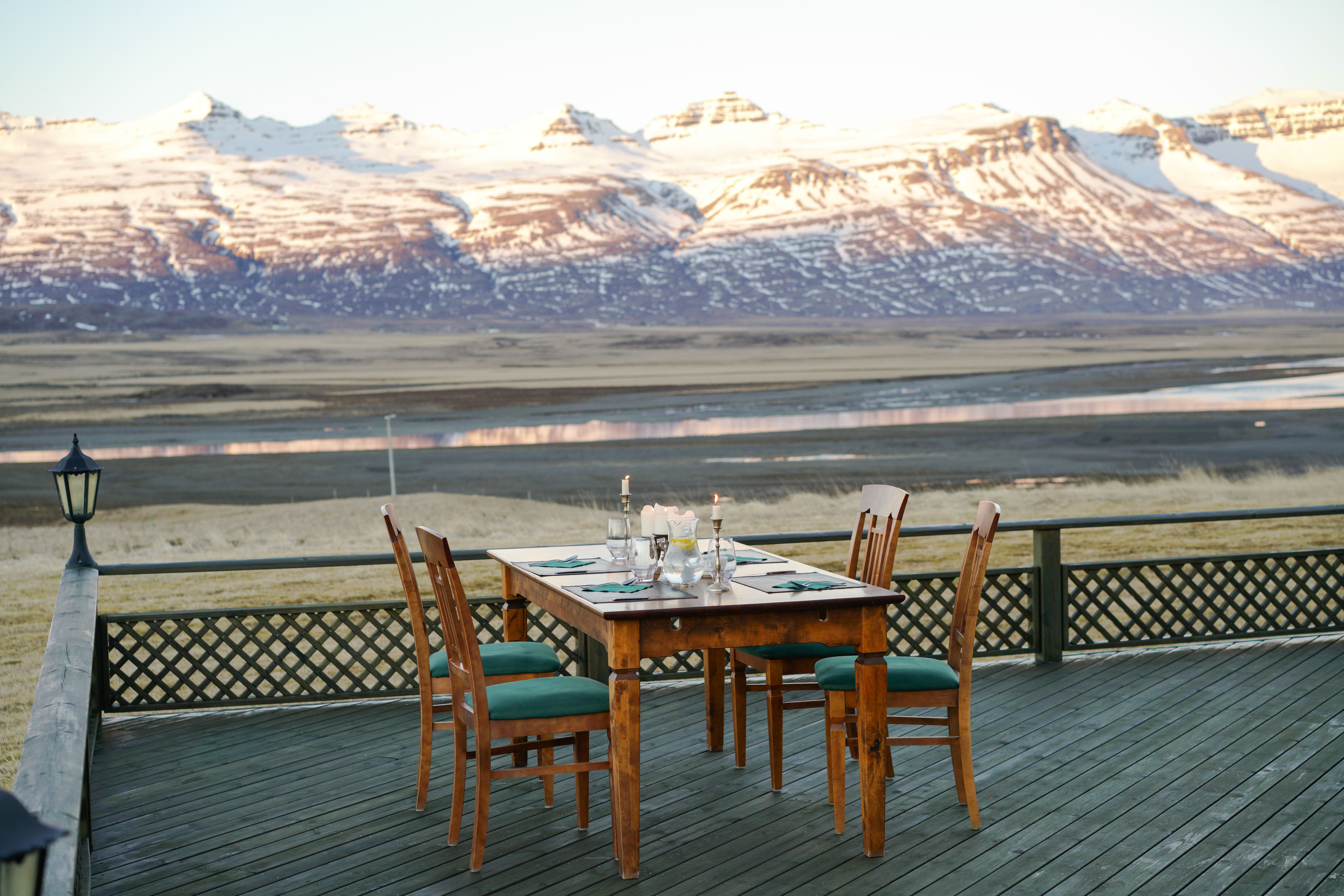
Furniture is the part of the project people enjoy shopping for and then regret within a year, usually because it was chosen for a showroom rather than a mountainside. Powder-coated aluminum frames, teak, and solution-dyed acrylic fabric all resist fading and moisture far better than painted wood or basic polyester cushions. Heavy wrought iron is a reasonable choice specifically because high-altitude wind makes lightweight furniture genuinely dangerous, not just inconvenient.
Fire pits and fireplaces are close to standard on mountain patios now, and for good reason – they’re one of the cheaper ways to extend usable hours into a cold evening. Stone or masonry surrounds hold up better than metal fire rings exposed to the same freeze-thaw cycles hitting everything else on the site.
A Maintenance Rhythm That Actually Gets Followed
The honest problem with most maintenance schedules is that they assume a homeowner who’s on-site every weekend, which describes very few cabin owners. A schedule that only works if nobody ever misses a visit is a schedule that will fail. My take: if you’re not there often enough to reliably reseal wood every one to two years, don’t choose a material that depends on it – pick composite, PVC, or dense hardwood instead, and save sealing-dependent wood for a primary residence you actually walk past daily.
Whatever material you land on, a realistic yearly rhythm looks something like:
- Spring: inspect for winter heave at footings, check fastener corrosion, clear drainage paths of debris
- Early summer: wash surfaces, reseal wood if that’s your material, check railing connections
- Fall: clear gutters and drainage before the first snow, remove or cover vulnerable furniture
- Mid-winter (if accessible): clear heavy snow buildup from any covered structure rated for lighter loads
Frequently Asked Questions
The Decision That Outlasts the Rest
If there’s one thing worth getting right before anything else, it’s matching the material to how often you’re actually going to be there to take care of it – not to how the space looks in a showroom or a glossy photo. A deck built for a climate it was never designed to survive will tell you so, usually in April, usually in the form of a board that wasn’t there in October. Get the footings, the material, and the hardware right the first time, and the rest of the outdoor space – the furniture, the fire pit, the pergola – just has to show up and work.